|
EXW |
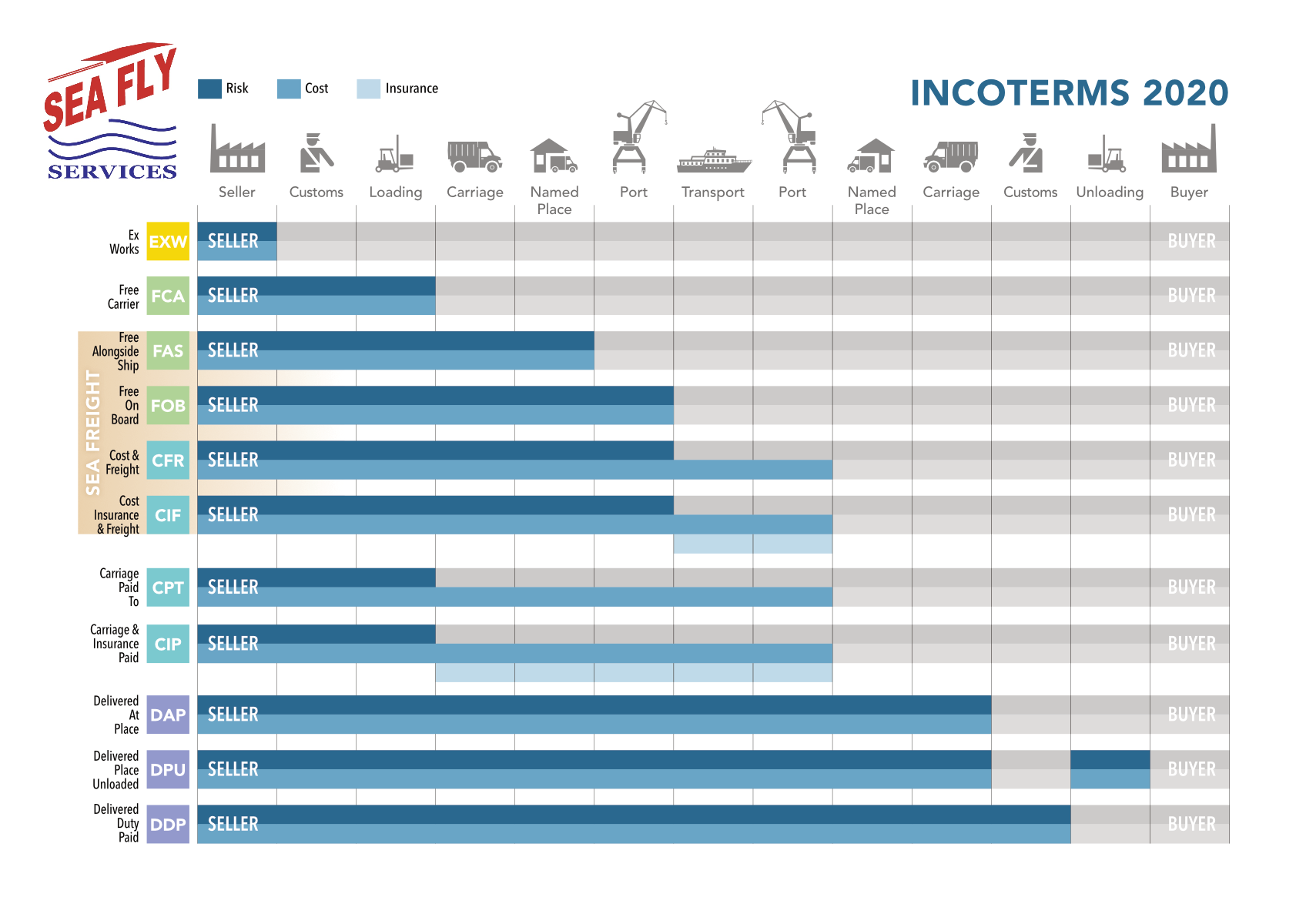
The buyer bears all costs and risks involved in taking the goods from the seller’s premises to the desired destination. The seller’s obligation is to make the goods available at his premises (works, factory, warehouse). This term represents minimum obligation for the seller. This term can be used across all modes of transport. |
|
FCA |
The seller’s obligation is to hand over the goods, cleared for export, into the charge of the carrier named by the buyer at the named place or point. If no precise point is indicated by the buyer, the seller may choose within the place or range stipulated where the carrier shall take the goods into his charge. When the seller’s assistance is required in making the contract with the carrier the seller may act at the buyers risk and expense. This term can be used across all modes of transport. |
|
FAS |
The seller has fulfilled his obligation when goods have been placed alongside the vessel at the port of shipment. The buyer is responsible for all costs and risks of loss or damage to the goods from that moment. The buyer is also required to clear the goods for export. This term should only be used for sea or inland waterway transport. |
|
FOB |
Once the goods have passed over the ship’s rail at the port of export the buyer is responsible for all costs and risks of loss or damage to the goods from that point. The seller is required to clear the goods for export. This term should only be used for sea or inland waterway transport. |
|
CFR
|
The seller must pay the costs and freight required in bringing the goods to the named port of destination. The risk of loss or damage is transferred from seller to buyer when the goods pass over the ship’s rail in the port of shipment. The seller is required to clear the goods for export. This term should only be used for sea or inland waterway transport. |
|
CIF
|
The seller has the same obligations as under CFR however he is also required to provide insurance against the buyer’s risk of loss or damage to the goods during transit. The seller is required to clear the goods for export. This term should only be used for sea or inland waterway transport. |
|
CPT
|
The seller pays the freight for the carriage of goods to the named destination. The risk of loss or damage to the goods occurring after the delivery has been made to the carrier is transferred from the seller to the buyer. This term requires the seller to clear the goods for export and can be used across all modes of transport. |
|
CIP
|
The seller has the same obligations as under CPT but has the responsibility of obtaining insurance against the buyer’s risk of loss or damage of goods during the carriage. The seller is required to clear the goods for export however is only required to obtain insurance on minimum coverage. This term requires the seller to clear the goods for export and can be used across all modes of transport. |
|
DAP
|
New Term – May be used for all transport modes Responsibilities
|
|
DPU |
Seller is responsible for moving the goods from origin until their delivery at the disposal place agreed unloaded at destination. The seller bears the risk until delivery of goods to the named place and should get a contract of carriage that matches the contract of sale until the agreed delivery point including the unloading of the godds. This term can be used for any mode of transportation. The seller must be confident to arrange the unloading of goods at the named place. Responsibilities
|
|
DDP |
The seller is responsible for delivering the goods to the named place in the country of importation, including all costs and risks in bringing the goods to import destination. This includes duties, taxes and customs formalities. This term may be used irrespective of the mode of transport. |